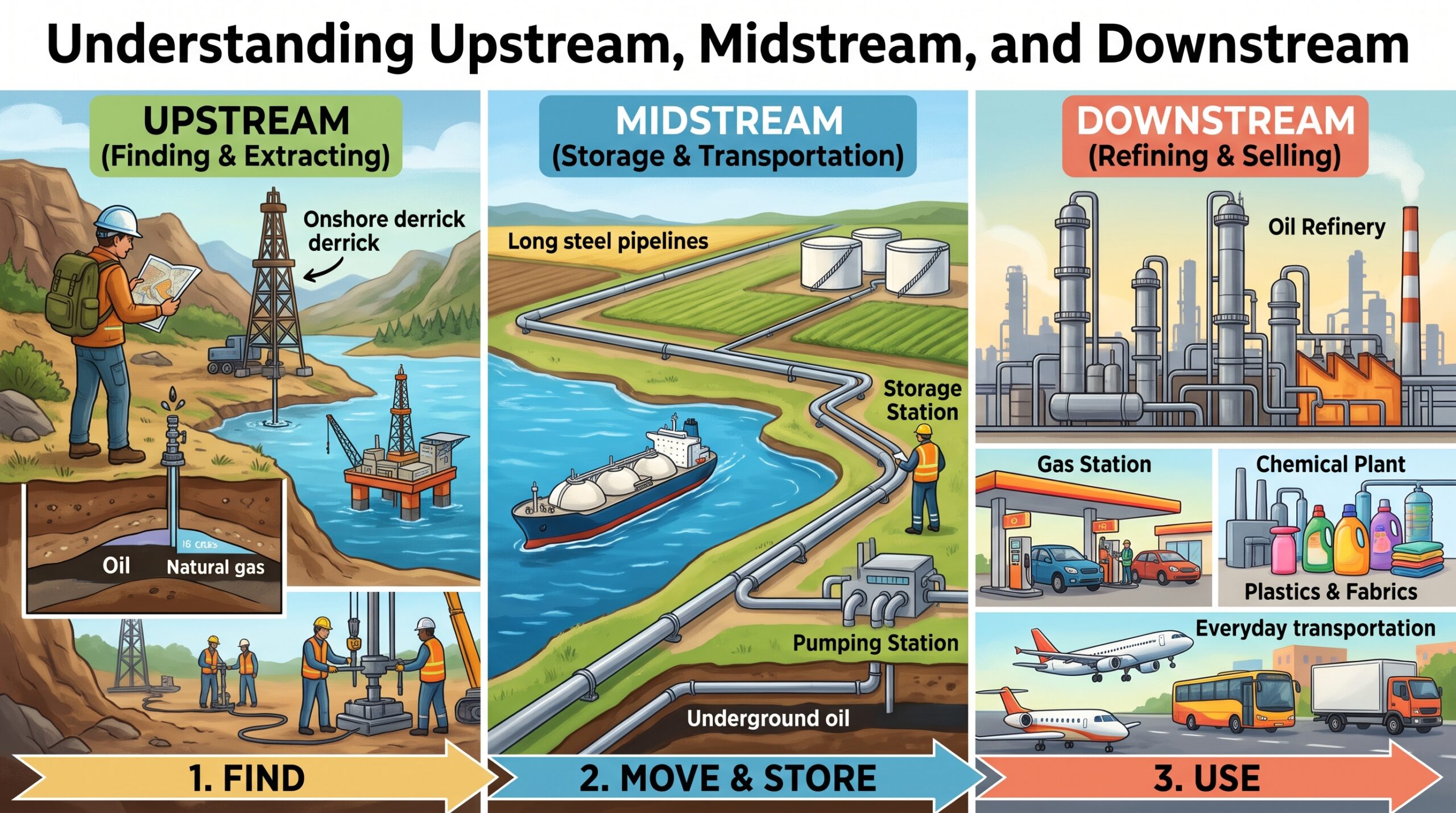
The global oil and gas industry is very large, so experts divide it into three main sectors. These sectors are called upstream, midstream, and downstream. Each sector has its own specific responsibilities, specialized workers, and unique machinery. Understanding these three parts makes it easy to see how energy moves from deep underground rocks all the way to consumers.
The upstream sector is all about finding and extracting the raw energy. It includes geologists who explore the land, engineers who plan projects, and crews who drill wells on land or at sea. Upstream work ends when the crude oil and natural gas are successfully brought out of the ground to the surface.
Next comes the midstream sector, which focuses on storage and transportation. Midstream companies operate long pipeline networks, pumping stations, crude oil tanker ships, LNG carriers, and storage tanks. They safely deliver raw fuels over thousands of miles. Finally, the downstream sector handles the final steps. Downstream includes the refineries that turn crude oil into gasoline, chemical plants that create plastics, and the gas stations that sell clean fuel to drivers every single day.